RSS ? Recent Blog Posts

Blogs » Java EE
 

The Daily Grind

: Java EE Blog

Java 6 for Mac OS X Back on the Radar

by Kevin Yank

Nearly two months on from the release of Mac OS X 10.5 (Leopard) and the resulting uproar from Java developers over Apple’s silent removal of preview builds of Java 6 for Mac, Apple has just as quietly released Java SE 6 Developer Preview 8, the first developer preview of Java 6 that runs on Leopard.

Many developers had feared that the removal of the previous preview signalled an intent from Apple to ignore Java 6 in favour of continued minor tweaks to Java 5. It seems now that the optimists were right: Apple just needed more time to get Java 6 right, so it took a step back and made some improvements to Java 5 for the Leopard release before pressing on with its work on Java 6.

The fact remains that if Apple were only to communicate with its closest allies—software developers—in a meaningful way, we wouldn’t be left playing these guessing games over the company’s intentions.


Missing in Action: Java 6 for Mac

by Kevin Yank

Java developers are up in arms over the recent release of Mac OS X Leopard, and the sudden silence from Apple regarding the future of Java 6 on the Mac. Not only did Leopard not ship with Java 6, but Apple has quietly taken down the developer preview of Java 6, and is reportedly deleting threads in the Apple developer forums asking why.

As anyone who has attended a developer conference in the past few years can attest, developers as a group are some of Apple’s best customers. If only Apple treated its developers with as much reverence.

In a post on The Java Lobby entitled So Long Apple. The Party’s Over, Michael Urban summed up the situation nicely:

Not only did Leopard not ship with Java 6, but Apple, in typical fashion, apparently thinks it has no obligation to its customers to inform them about why the plans changed, and when (or even if at this point?) Apple will ever have a working copy of Java 6.

Now, it’s obvious that Apple hasn’t dropped Java completely. As many developers have pointed out, Apple did do plenty of work on its version of Java 5 for the Leopard release. Ben Galbraith recently gave a …


First Look: Google Web Toolkit

by Kevin Yank

Portions of this entry were first published in the SitePoint Tech Times #139.

Have you written your own AJAX framework yet? It seems all the big boys are doing it. Microsoft is bringing us Atlas for ASP.NET, Yahoo!’s User Interface Library is open source, server agnostic and beautifully documented and Adobe is working on Spry, which is off to a shaky start in the web standards department. Do we really need another?

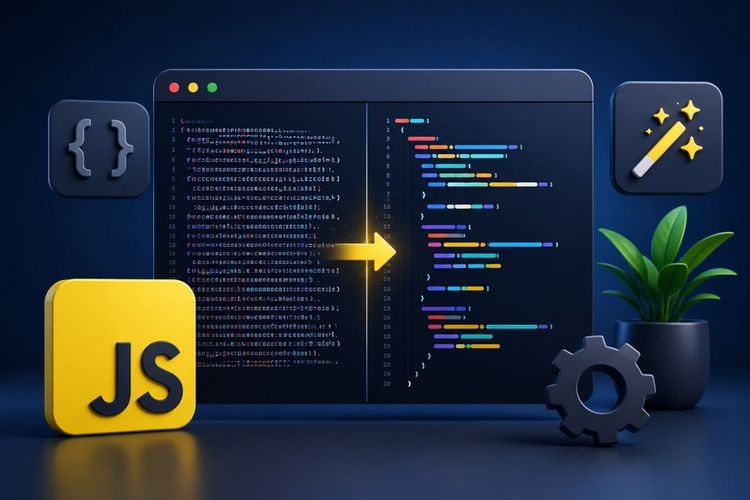
Google’s late-but-inevitable entry into this arena is certainly no copycat. The Google Web Toolkit (GWT) is nothing less than a completely original approach to web development that allows server-side Java developers to take their skills to the JavaScript domain… without having to write any JavaScript.

In short, you write, test and debug your client-side code in Java and then use a specialized compiler to convert it all into cross-browser JavaScript for use on your site.

How’s it work?

You can write you client-side code using the usual core Java classes in the java.lang and java.util packages, as well as a nice library of classes that come with GWT that let you access the same browser features that are available in JavaScript (the Docment Object Model, alert boxes, setTimeout, XMLHttpRequest, etc.).

GWT Menu Bar ...</p/>
<script src=


Write Java Web Apps in Visual Basic (or JavaScript!)

by Kevin Yank

More from the JavaOne 2006 keynotes…

One of the new key features in Java 6 (Mustang), available now in beta and weekly snapshots and slated for release in October, is support for alternative languages running on the JVM. In particular, Java 6 will ship with support for running JavaScript code as a first-class citizen, with complete access to the Java class libraries and the ability to call back and forth between Java and JavaScript code within a single application.

At JavaOne on Tuesday, Sun took the wraps off of two new projects that are taking advantage of this capability in a way that will be of interest to web developers. The first, Project Semplice, brings the Visual Basic language to the Java platform. Not meant for porting existing VB apps over to Java, but rather for allowing Visual Basic developers to transition to the Java platform while leveraging their existing skills, Semplice lets you write code using VB syntax (including all the automatic type conversion, support for properties implemented by methods, and other niceties that VB developers love so much) that compiles to Java classes that will run on the Java 6 VM. As J# is to Java, Semplice is to Visual …


Sun: Open source Java not whether but how

by Kevin Yank

Sun has conceded: Java will be open sourced.

During his opening keynote at JavaOne 2006, newly annointed Sun CEO Jonathan Schwartz welcomed to the stage Rich Green, Executive VP of Software, with the hard question: “Are you going to open source Java?”

After a little mock evasiveness, Green explained Sun’s latest thinking on the matter, ending with the bottom line: “It isn’t a question of whether, but a question of how. And so we’ll go do this.”

Green did take the time to point out that, from the perspective of community involvement and contribution to the development of the Java platform, Java is already effectively open source:

There’s two battling forces here. There’s the desire to completely open this up–complete access–I mean, so many changes of the licenses have been made that it’s virtually all there. But there is the sense of wanting to complete the program. The flip side is compatibility really matters. I don’t think anybody wants to see a diverging Java platform. One of the great values of Java has been that we’ve been able to keep it together–something you can all rely on in terms of its consistency and value and evolution. And the challenge, going forward, is how to …


Follow JavaOne 2006 online

by Kevin Yank

If you enjoy working in Java like I do, there are probably few places you would rather be right now than at JavaOne 2006. Particularly hot web development topics at JavaOne this year include the newly-released JavaEE 5 platform for building enterprise Java applications more easily, and the associated updates coming in NetBeans 5.5.

But whether due to time, money or geography, not everyone can make it to San Francisco to bask in the Java love for a week.

Thankfully, you can follow the big picture from wherever you happen to be. All of the general sessions (i.e. keynote speakers and demos) are available for viewing via live and on-demand webcasts that are almost as good as being there (plus you get to skip the boring bits!).

As for the more focused technical sessions, most of them have published downloadable PDFs containing the slides for free download from the session catalog. You can also wait until the dust settles and the slides will be freely available with synchronized audio from JavaOne Online.

And if podcasts are your thing, PodTech.net is hosting a series of podcasts from JavaOne, including the full audio of all the general sessions. Unfortunately, there is no dedicated feeed for …


JRun 5 hits beta

by Kevin Yank

Adobe (formerly Macromedia) JRun 4 was released in 2002. Since then, Java web development has moved on somewhat. JRun 4 supports Servlet 2.3 and JSP 1.2, while most servers are now on Servlet 2.4 and JSP 2.0. At four years since the last release, many developers assumed development of the server had ceased.

But now it looks like JRun might be set to rise from the ashes, with Adobe looking for beta testers of a major new release. At this stage, Adobe is tight-lipped on what new features will come with this version–EJB 3.0? Jetty-like continuations? More affordable pricing?

I’ve asked for a look at the beta, and will report what I can when I can.


Tomcat sucks… Is Apache flawed?

by Kevin Yank

High on my list of Java blogs is Hani Suleiman’s The BileBlog, in which he gives unapologetically abrasive reviews of popular Java projects and the people behind them. In the past, he has had been less than complimentary of the Apache Project’s various open source (”opensores”) Java offerings like Maven and Struts. Today, he took Tomcat to task.

Tomcat, of course, provides the reference implementations for the Servlet and JSP specifications, but by virtue of the fact that it is free, it’s also the server of choice for many small-to-medium businesses. I took a critical look at Tomcat myself awhile back, while looking for a beginner-friendly Java web application server (I’m still looking).

Suleiman’s critique of Tomcat is based, somewhat refreshingly (he often resorts to unpersuasive, if entertaining, personal attacks on the developers), on the quality of the project’s code–or rather its lack thereof. Choosing a pivotal but relatively uncomplicated class (DefaultServlet, which is responsible for serving static resources like HTML/CSS/JavaScript files and images), he points out many examples of terrible coding practice, of which these are only a sampling:

Initialization code that lazily catches Throwable

// Set our properties from the initialization parameters


Sun Developer Days 2006: Day Two

by Kevin Yank

The second day of Sun’s Developer Days 2006 conference in Melbourne last week was a similar mixed bag to the first. Be sure to read my coverage of day one if you missed it.

Before the day’s sessions began in earnest, Sun organiser David Coldrick got up to plug two useful resources for Java developers to keep up with the latest developments between Developer Days conferences: The Java Posse podcast (which I highly recommend as well!), and javapassion.com, which I have covered in this blog before.

Building Great Games for the Mobile World, Chuk Munn Lee (Sun)

Having done some work on mobile games already, I was hoping for some insight into the technical issues that face game developers on this platform: device-specific API fragmentation, application size and processing speed limits, inconsistent control methods, and more. What we got instead was a non-technical overview about the pros and cons of developing games for mobile handsets as compared to the PC- and console-based game platforms.

In brief, Java Micro Edition (ME) is a lightweight platform that can let you produce a fully-realized game for millions of potential users with as little as one man-month of development time. Successful games for this platform should take into …


Sun Developer Days 2006: Day One

by Kevin Yank

Sun Microsystems is winding up a tour of Australia and New Zealand with the final stop of its Sun Developer Days 2006 conference today and tomorrow in Melbourne. Fellow SitePointer Lachlan Donald and I were there today to take in the Java vibes, and as with most free conferences there was a great deal of variation in the quality of the sessions we attended.

Sun Developer Tools, Bob Brewin (Sun)

In his keynote, Mr. Brewin spoke chiefly about the push Sun is making towards Ease of Development (EoD) across the entire Java platform and the set of Sun developer tools. Key examples of this included the new language features in Java SE 5.0, the release as a free download of Java Studio Creator, and the Java Persistence API, which is set to replace entity beans in EJB 3.0. This is all old news, however, and Brewin looked like he’d delivered this keynote fifty times before. Though some of the improvements being made to the Java landscape may be inspiring, this session was not.

Changing the Landscape of Software Development, Simon Ritter (Sun)

Mr. Ritter’s keynote essentially covered all of the ways Sun is fostering open source development with Java. Again, there was very little …


Sponsored Links

SitePoint Marketplace

Buy and sell Websites, templates, domain names, hosting, graphics and more.

Logo Design, Web page Design and more!

99designs

  • Custom logo designs created ‘just for you’.
  • Pick the design you like best.
  • Only pay if you’re satisfied with the result.

Want More Traffic?

Get up to five quotes from qualified SEO specialists, with no obligation!

Get A Free SEO Quote Now!